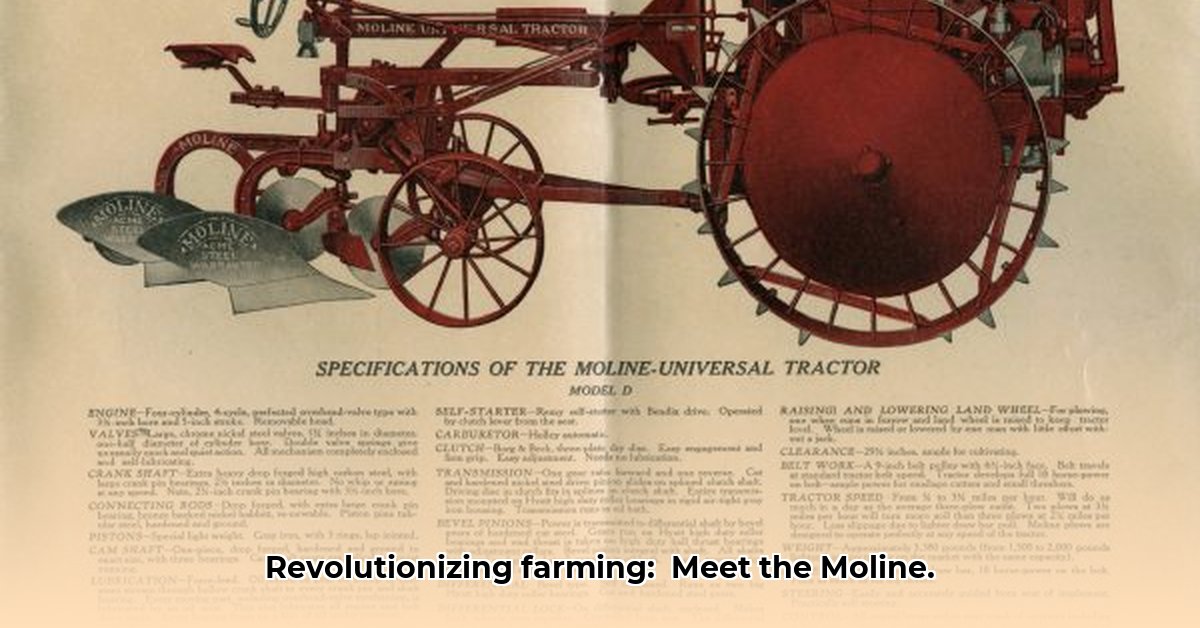
The Moline Universal tractor, specifically the Model D, wasn't merely another farm machine; it was a revolutionary leap forward in early 20th-century agriculture. Imagine the excitement surrounding the first iPhone – that's the kind of impact this tractor had on farmers of its time. This wasn't your grandfather's horse-drawn plow; it was a technological marvel. Its powerful four-cylinder engine, spinning at a remarkable 1800 rpm (revolutions per minute), was unheard of for its era. It even boasted electric starting, lights (imagine working in the field after sunset!), and a high-tension ignition system. This tractor was strikingly advanced for its time. Rigorous testing in Nebraska showcased its impressive capabilities: 17.5 drawbar horsepower and a substantial 27.5 belt horsepower – exceeding its advertised specifications! Wasn't this impressive power a significant advancement for the time? For more details on the Model D, check out this helpful resource.
More Than Just Muscle: Versatility and Sustainable Practices
The true brilliance of the Moline Universal wasn't solely its power; it lay in its versatility. This tractor could handle a wide array of farm implements, dramatically increasing farmer efficiency. This efficiency is a cornerstone of modern sustainable farming – maximizing resource utilization. Farmers could accomplish more in less time, conserving fuel and labor – crucial then, and even more vital for environmentally conscious agriculture today. A clever design feature – high crop clearance – minimized soil compaction, maintaining soil health and long-term productivity. This forward-thinking design anticipated the modern emphasis on soil health, a key element of sustainable agriculture practices.
A Peek Under the Hood: Ingenious Engineering
The Moline Universal D incorporated an electric governor, an exceptionally innovative feature for its time. This sophisticated system optimized engine performance and fuel economy, a precursor to the precision agriculture technologies prevalent today. The electric starter was a luxury, making the tractor significantly easier and less physically demanding to operate. Combine this with electric lights for nighttime work, and it's clear the designers prioritized the farmer's well-being, focusing on user-friendliness and safety – a stark contrast to the grueling work associated with earlier farm equipment. These small details illustrate Moline's thoughtful consideration for the user.
The Business of Innovation: Challenges and Lessons
Despite its innovative design, the Moline Universal faced significant hurdles. Its $1325 price tag was a substantial investment for many farmers. Furthermore, many parts were proprietary, sourced from companies like Remy, Root & Vandervoort. This created potential supply chain vulnerabilities, highlighting a crucial lesson: even cutting-edge technology necessitates a robust business plan to thrive. The eventual financial difficulties of the Moline Implement Company underscore this point – demonstrating that even a groundbreaking invention can stumble without effective marketing and market penetration. The story of the Moline Universal serves as a cautionary tale about the business side of technological innovation – a viable business model is just as vital as the technology itself for long-term success. This remains a crucial lesson when considering new agricultural technologies today.
A Lasting Legacy: Shaping the Future of Farming
The Moline Universal, despite a relatively short production run, left an indelible mark on agriculture. It proved that significant advancements in farm machinery were feasible, paving the way for the even more sophisticated tractors of today. Its emphasis on efficiency, versatility, and soil conservation strongly aligns with the principles of sustainable agriculture. This machine provides a valuable case study – a compelling example of how innovation requires not only engineering brilliance but also prudent business practices and adaptability. Its enduring legacy lies not only in its groundbreaking design but also in the ideas it sparked for the future of farming.
Comparing the Moline Universal to its Peers: A Look at the Competition
Direct comparisons to contemporary tractors are challenging due to limited and often debated historical data. Further research is crucial for definitive conclusions. The following table presents a hypothetical comparison to illustrate potential differences, emphasizing the need for more robust historical analyses.
| Feature | Moline Universal D | Hypothetical Competitor A | Hypothetical Competitor B |
|---|---|---|---|
| Engine Type | 4-cylinder, high-speed | 2-cylinder, low-speed | Single-cylinder |
| Horsepower (Drawbar) | 17.5 | 10 | 5 |
| Starting System | Electric | Crank | Crank |
| Approximate Cost | $1325 | $800 | $500 |
| Key Feature | Electric Governor | Simplicity of design | Robustness/Durability |
(Note: Competitor specifications are for illustrative purposes only and are not based on fully verified historical data. This reflects interpretations of the competitive landscape at that time and should be considered cautiously pending further research.)
The Moline Universal tractor remains a testament to human ingenuity and the relentless pursuit of progress in agriculture. Its story – a blend of remarkable innovation and the inherent difficulties of bringing that innovation to market – continues to offer valuable insights for achieving sustainable farming methods today. Continued research into its design, manufacturing, and market reception is urgently needed for a complete understanding of its historical significance.